Pendaftaran Jalur Reguler 2 Gelombang 2 TA 2026-2027 T.A. 2026 - 2027 Daftar Sekarang

Pendaftaran Profesi Semester Gasal Gelombang 2 TA 2026-2027 T.A. 2026 - 2027 Daftar Sekarang

Pendaftaran Program Khusus Reguler 2 Gelombang 2 TA 2026-2027 T.A. 2026 - 2027 Daftar Sekarang

Pendaftaran Program Alih Jenjang Gelombang 4 TA 2026-2027 T.A. 2026 - 2027 Daftar Sekarang

Pendaftaran Program RPL Gelombang 4 TA 2026-2027 T.A. 2026 - 2027 Daftar Sekarang

Pendaftaran Magister Semester Gasal Gelombang 2 TA 2026-2027 T.A. 2026 - 2027 Daftar Sekarang

Perguruan Tinggi Terbaik No 2 Institut Swasta 2020

Pendaftaran

Info Pendaftaran

Tata Cara Daftar Formulir Pendaftaran Online Tata Cara Pembayaran Online Jadwal Pendaftaran Prodi Tepat Untukmu Info Biaya Pendidikan Info Beasiswa Program Kelas Karyawan

Info Kost, Transportasi & Biaya Hidup

Asrama Mahasiswa KOSy Kost Mahasiswa Transportasi Prediksi Biaya Hidup

Fakultas

Fakultas Farmasi

Pendidikan Profesi Apoteker S1 Farmasi D3 Farmasi D3 Teknologi Industri Farmasi dan Pangan

Fakultas Kesehatan

Pendidikan Profesi NERS Pendidikan Profesi Bidan S1 Keperawatan S1 Kebidanan S1 Gizi S1 Fisioterapi S1 Psikologi D4 Pengobatan Tradisional Tiongkok D3 Fisioterapi D3 Kebidanan

Fakultas Kedokteran

Pendidikan Profesi Dokter S1 Kedokteran

Fakultas Kedokteran Gigi

Pendidikan Profesi Dokter Gigi S1 Pendidikan Dokter Gigi D3 Teknik Gigi

Fakultas Teknologi dan Manajemen Kesehatan

S2 Kesehatan Masyarakat S1 Kesehatan Masyarakat S1 Administrasi Rumah Sakit D4 Teknologi Laboratorium Medis D3 Teknologi Laboratorium Medis D3 Rekam Medis & Informasi Kesehatan

Tentang IIK Bhakta

Profil IIK Bhakta

Sejarah & Perkembangan IIK Bhakta Sambutan Rektor Visi Misi Reputasi Rektor IIK Bhakta masa ke masa Prestasi Jajaran Pimpinan IIK Bhakta Dewan Penyantun IIK Bhakta Maskot Bhakta Filosofi Pendidikan

News & Events

Upcoming Event Latest News Announcement

Adipadma Library

Adipadma Library Repository Adipadma Library Online Catalog

Fasilitas & Peta Kampus

Fasilitas Kampus Peta Kampus IIK Bhakta Virtual Tour

Services Unit

Rumah Sakit Gigi & Mulut IIK Bhakta Pelayanan Kemahasiswaan & Alumni Pusat Bahasa PLTI (Pusat Layanan Tes Indonesia)

Other

Blog Lumina Kalender Akademik Bhakta Peduli Bhakta Shop Pusat Karir Bhakta

Kehidupan Kampus

Organisasi Mahasiswa DPM BEM HIMA UKM
MBKM

Search

Apa yang sedang kamu cari ?

Dealing with a Tantrum-Throwing Child, Here's How to Handle It!

Registration for Year 2026 - 2027 Regist Now

The Employee Class Program (RPL, Program and Level Transfer Categories) for TA 2024-2025 has been opened. More Info


Dealing with a Tantrum-Throwing Child, Here's How to Handle It!

6 Sep 2023 15:57 by Rizki Aprilia


Previous Next
 

Tantrums are a normal part of a child's development, especially around the age of 5. What is a tantrum? A tantrum is an extreme behavior in children that tends to be aggressive, unpleasant, and often involves a sudden outburst of anger.

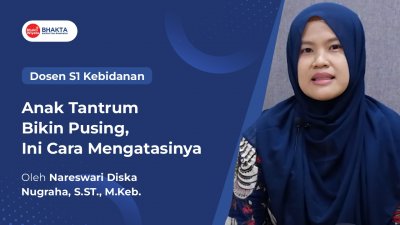
"A child who whines, throws tantrums, rolls on the floor, and screams loudly can be experiencing a tantrum," explains S1 Midwifery Lecturer IIK Bhakta Nareswari Diska Nugraha SST MKeb. Children have not yet fully learned to control their emotions, so they express them through tantrums.

Nareswari explains that the symptoms of tantrums can vary for each child. Here are the symptoms of tantrums based on different age groups of children:

  • Children under 3 years old: crying, biting, hitting, kicking, screaming, and throwing objects around.
  • Children aged 3-4 years: similar to those under 3 years old, but with added whining, stomping their feet, and slamming doors.
  • Children aged 5 and above: tantrums take on a broader form, such as intentionally breaking things and threatening people around them.

Furthermore, factors that influence the occurrence of tantrums in children include:

  • Feeling blocked from getting what they want.
  • Inability to express themselves. Young children often cannot articulate their desires, leading to frustration and outbursts.
  • Unmet needs. Parents should provide sufficient space for active children.
  • Parenting style. Some parents may indulge their children, but this can have negative consequences. When a child's desires are not met, they are more likely to become angry, leading to tantrums.
  • When a child is tired, hungry, or unwell.
  • When a child is stressed and feels uncomfortable in their environment.

If a tantrum occurs, mothers do not need to panic. Tantrums are a normal condition. Mothers can handle tantrums using the following methods:

  1. Give a Hug

A hug can soothe a child's overflowing anger. However, the hug here should be a tight, wordless one. Mothers simply need to hug their child tightly and stay quiet. Motherly hugs create a sense of security and calmness in the child.

  1. Stay Calm, Don't Yell

A mother's behavior sets an example for the child. If a mother deals with problems by shouting, the child may adopt that behavior. Therefore, it is essential to remain calm when a child is having a tantrum.

  1. Help the Child Do What They Can't

Tantrums can be caused by something as simple as a child's inability to accomplish a task they desire. For example, a child may struggle to tie their shoelaces, leading to frustration and eventually a tantrum.

If this happens, the initial step a mother can take is to gently ask the child what is making them angry. After that, the mother can help the child achieve what they want.

  1. Allow the Child to Vent While Staying Calm Nearby

Often, a child having a tantrum just needs to release their emotions momentarily. Therefore, let the child be angry when having a tantrum. The mother simply needs to stay quietly nearby. However, if the child becomes physically aggressive, such as throwing objects, the mother should intervene immediately.

  1. Avoid Punishment

When children experience tantrum symptoms like anger and throwing things, mothers should avoid punishing them. Punishment can trigger trauma in children.

In addition to dealing with tantrums, mothers can also take steps to prevent them. If you are aware that your child is prone to tantrums, Nareswari offers tips for preventing tantrums:

  • Recognize habits that lead to tantrums in your child.
  • Provide companionship for your child during play and difficult situations.
  • Offer guidance on acceptable behavior using positive and pleasant language.
  • Praise your child when they do not have tantrums according to agreements.

The key to dealing with a tantrum-prone child is patience. Mothers do not need to rush. Avoid scolding or raising your voice. "The tip is to provide gentle touch and communicate with a kind tone," says Nareswari.

Apart from how to handle tantrum-prone children, there are many other interesting topics you can watch on the IIK Bhakti Wiyata YouTube channel.

 
icon e-brosur

Kirim e-Brosur

Ingin tahu detail info tiap prodi di IIK Bhakta dan info beasiswa? kami akan mengirimkan brosur lengkap untuk Anda!